Tag Archives: schizoaffective

T is for tagline

What would an Orange County housewife be without a tagline. I am a Bravo TV fan and watch the housewife shows.

I am having trouble coming up with anything original. There are a few quotes I like.

“Nobody realizes that some people expend tremendous energy merely to be normal.”

Camus

or

“Of all the things I’ve lost, I miss my mind the most”

Mark Twain


Maybe something along the lines of:

Schizoaffective disorder does not define me, but it has a strong presence in everything I do.


Schizoaffective Disorder

I was not sure what to choose for an “S” word, but this disorder affects my whole life. Also, most people have never heard of it.

Schizoaffective is basically a combination of a thought disorder, like schizophrenia and a mood disorder, like bipolar. There is controversy about the diagnosis. It can resemble bipolar with psychotic features except you have weeks of psychotic symptoms while not in a mood state (manic or depressed). Or, it can seem like schizophrenia with depression. There are 2 types, bipolar type and depressive type. I have the bipolar type and have had mania.

I had years of psychotic symptoms, it was either a long episode with periods of insight and lucidity, or a number of relapses. It all is rolled together in my mind. But, once I got on a good medication cocktail (I take several types), I have not had the severe symptoms. Now, I am more troubled by fatigue, anxiety and milder depressions.

Prognosis varies. I am married, have children, work part time. I had a psychotic break at 39. I know nothing about dating with a diagnosis or pregnancy and psych meds. Mental illnesses can be hard on marriages. We were married for 7 years before I was diagnosed. Fortunately, my husband is supportive and understanding.

I see a psychiatrist, a therapist, and go to a support group for mood disorders. Some good resources can be found through the National Alliance for Mental Illness NAMI.org and depression and bipolar support alliance dbsa.org.

Quiet

I like places that are peaceful and quiet. I would rather be alone than at a party.

When I was younger, I would barely speak. They called me shy. I have social anxiety. Now, I can speak in front of groups, although I still shake, but it took a lot of work. I am typically a bundle of nerves. I have a number of coping skills. They all help a little, and it adds up.

I have a list of different coping methods here:

https://lorib.blog/2017/03/20/coping-with-schizoaffective-disorder/

Neurotransmitters

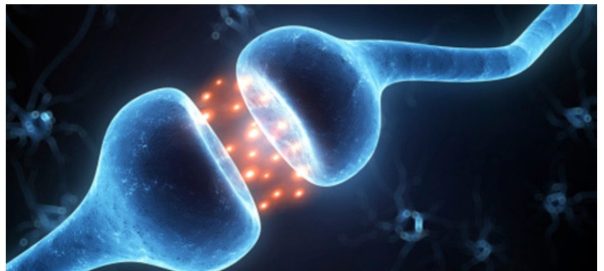
I don’t understand them well, but neurotransmitters rule my life. Too much dopamine and I get psychotic. Too little serotonin and I am depressed. Along with others like glutamate it is a delicate balance

I take medications and supplements to help restore the balance. They seem to be working. If only they did not come with side effects. My mouth is constantly dry to the point it is hard to talk. I usually carry a bottle of water everywhere. I am chronically fatigued which I believe is due in part to my medications. It is definitely worth those side effects to be functional

Chemical imbalance is one theory for mental illness. In my case it makes sense to me.

A Doodle of How I Feel

I am not good at drawing, but I doodled a picture of how I feel.  It is me with my hands on my ears with thoughts racing a million miles a minute. Yelling Stop in my head.

face2

But, to the world around me, I seem fine.

The Gift

I go to a support group for people with mood disorders.  Moods are part of schizoaffective disorder. The moderator likes to refer to our illness as a ‘gift’. Like we have special powers. He believes he is more creative, has deeper feelings, and I don’t know what else. He even said he would not take a cure if he would lose these things.  He is definitely pro-med, pro-treatment. He also sees more positives than I do.

If there was a cure, I would jump at the chance.  The bad things, far outweigh any benefits. If this is a gift I want to return it.gift3

The Stigma of Co-Occurring Disorders

In my opinion, this is my best yet 🙂

Originally published on Psych Central
https://blogs.psychcentral.com/triple-winner/2017/03/the-stigma-of-co-occurring-disorders/

There is a great deal of stigma attached with both mental illnesses and addictions. That is one reason I talk about my experiences. So, others won’t feel alone, and, to put a face to these conditions. It is scary to get a diagnosis of a life-long mental health condition that all you have heard are extreme negatives. People can lose hope. And, people fear what they don’t know.

I also have shame, or self-stigma. I have worked on accepting the schizoaffective diagnosis and at this point am okay. There was a time when I felt, less than, because of the severe symptoms. Now, I know I could not control what happened in the past, and just work on staying stable.

Social anxiety is something I contend with daily, and I cannot seem to prepare enough. I don’t know if I can ever accept how limiting it is for me. There are some things, like volunteering at my children’s school events, that are just too busy for me. I cannot enjoy shopping or parties, I just want an exit. I have worked very hard on this and work with people now and even do public speaking, but it is difficult.

The alcohol addiction label is new to me. In the program I am doing, SMART Recovery, they don’t give labels. But, I need to call it something. The drinking is not new, just the acknowledgement.

There are choices of programs for changing addictive behaviors. Some people work more than one at a time. This was just one that seems to fit my philosophy. It uses cognitive behavioral therapy (CBT) principles and I already learned some of those for my anxiety.

I haven’t had serious consequences from drinking. No DUIs or jail time, No relationship problems. But, I drink more than I would like to and it is hard for me to abstain completely.

When I started this blog, I decided I would like to write about the alcohol component along with the mental illness. So many of us have co-occurring disorders. I was excited, and then, I paused. What will people I know think when they see ‘alcoholic’?

Then I giggled. First, because I can’t decide which is the lesser of 2 stigmas (it doesn’t matter). And then, because they all have seen me drink. It isn’t really a surprise.

The secret is that I am working on it.

Info on SMART Recovery
http://www.smartrecovery.org/

Info on Alcoholics Anonymous (AA)
http://www.aa.org/
Mothering and Mental illness

Originally posted on Psych Central

https://blogs.psychcentral.com/triple-winner/2017/03/parenting-and-mental-illness/

It is natural to wonder if you are a “good enough” mother. This can be amplified with mental illness.

My children were ages 2 and 4 when I had a psychotic break. I was hospitalized twice that year After that, I needed help doing basic tasks for a while. Even when I got back on my feet, I was not 100%.

I was too tired to take my son to the park and too anxious to make play dates. My daughter didn’t have the “supermom” some of her friends seemed to have. She has me. And, I try. But, I feel like they got a raw deal.

And there was more. I would get paranoid they were going to get harmed and not want them to see certain people. I was almost constantly distracted by voices and delusions of messages and not nearly as attentive as I could have been.

They didn’t understand that I had a mental illness called schizoaffective disorder. I had planned to answer questions as they asked, but they didn’t ask much. My daughter once questioned why I was making a sign for a National Alliance on Mental Illness (NAMI) class. I told her it was because I had a mental illness. She just said “I didn’t know that “and went back to playing.

They know I take medication and I am tired often. I didn’t want them to worry it was something else, and it seemed time we talked about it, so one day I told them. My son did not know, my daughter knew already. Neither of them wanted to hear any more.

I worried my behavior would affect them. That they would have some problems because of me. But, they are the best kids. They have friends, do well in school, are active. I need to give credit to the other people in their lives: my husband, their grandma, teachers, other parents. They picked up where I couldn’t.

I was fortunate. I had my children before I was diagnosed, so I didn’t have to worry about medications and pregnancy. That can get complicated and needs involvement with your psychiatrist and obstetrician.

Schizoaffective disorder has a genetic component. Not everyone has a relative with a psychotic disorder, but it isn’t unusual. That is another of my worries. Will I pass this illness on to my children? So far, that hasn’t been an issue.

I have a lot of “what if’s” about my mental illness. If I had known I had it before I had a psychotic break would we have had children? Would my husband have married me? I don’t know. I like my life and I can’t imagine it any differently than the way it is now

Trusting Your Moods With Schizoaffective Disorder

youth-570881_1280

First published Psych Central

https://blogs.psychcentral.com/triple-winner/2017/03/trusting-your-moods-with-schizoaffective-disorder/

I have a thought and mood disorder called schizoaffective disorder. It is similar to bipolar disorder, in that I have mood swings with periods of mania and depression.

When I was treated for my first severe manic episode I was heavily sedated and slowly titrated down on the medications. When I got to a dosage where I was no longer sedated, and my symptoms were under control, I started to feel okay, good even.


It scared me. “Would I feel too good?” I voiced my concerns to my psychiatrist and he reminded me I usually have other symptoms that precede mania. I think most people do.

You could go through a list of symptoms and see which ones are typical for you that would be noticeable.

Do you spend a lot of money?

Are you impulsive?

Do you talk fast?

Do you start lots of projects?

A lot of people monitor their sleep. I often have trouble with insomnia, so that isn’t a particularly good indicator for me. One thing is that I get irritable. I am usually pretty mellow, so if I start snapping at people that is a good sign that something is off. My psychiatrist also told me if people are looking at me strangely that is a warning sign. I am not sure if he meant I do strange things or I get paranoid, which I do, and get suspicious.

Isn’t everyone entitled to an off day, though? Sometimes when I am upset at someone, it is for a good reason. A lot of people imagine others think poorly of them, once in a while.

It would help to have someone I trust, tell me if I didn’t seem right. I have trouble with trust, though, when I am symptomatic. I think everyone else has the problem and I am fine. I am working on that, because I know it is important. Otherwise, you can have a great list of warning signs, but deny them. “I’m not talking fast, you are just listening slowly”.

Once you notice these warning signs, what do you do? That is a million dollar question.

This is where it is best to consult with your doctor and find out when they want you to contact them.

It is good to catch things early, but you don’t want to be worrying every time you have a bad, or good, day.

Coping With Schizoaffective Disorder

Originally published Psych Central
https://blogs.psychcentral.com/triple-winner/2017/03/coping-with-my-mental-health-symptoms/. (Archived)

With schizoaffective disorder and social anxiety, I have a number of different types of symptoms to cope with.

For me, psychotic symptoms can be the hardest to deal with. The first thing I turn to is medication. I have tried a few of the newer atypical anti-psychotics and fortunately, I respond well. It takes more than medication alone, though.

Some things that can help people cope with psychotic symptoms:

• Help from others– I have issues with fatigue and motivation. If someone can help me with chores: childcare, housecleaning, cooking it is a big relief.
• Music– Listening to music can help drown out voices.
• Cognitive Behavioral Therapy (CBT) – This is a type of therapy based on moving from distorted thinking to more rational thinking. It can be used to treat people with psychotic symptoms, but anyone can have distorted thinking.
• Asking– If I trust someone I can ask them to help me determine what is real.
• Acting “As If” – I can act like consensus reality (what everyone else believes) is real. The longer I do the more I start to believe it.
• Psychiatric Service Dogs– Dogs can be trained to perform specific functions that help with your disability.
• Technology– Apps like snapchat can be used to verify that what you are seeing is real.

My mood symptoms are varied. I rarely am euphoric. I am more typically irritable and paranoid. Or sad and anhedonic. But, I can be reckless and impulsive. Some things that help me with different mood symptoms. (There is overlap with the different coping skills):

• Support groups – A number of organizations have support groups for people with mental health conditions. Depression and Bipolar Support Alliance (DBSA) and National Alliance on Mental illness (NAMI) are two national organizationsOkay.
• CBT– like I mentioned above this is a type of therapy that helps with distorted thinking. Distorted thinking can lead to depression and CBT can help your mood.
• Acting against Impulse– This is a Dialectical Behavioral Therapy (DBT) technique. If your first impulse is to do something reckless, push yourself to do the opposite.
• Talk Therapy– This goes for all the sections, but if I am irritated at something specific my therapist can help me put it in perspective.

For now, I have my psychotic symptoms pretty well under control and my depressions are mild. I haven’t been manic in years. I am still plagued by anxiety. Here are some of my anxiety coping skills:

• Breathe– I take a deep breath and let it out slowly to help me calm down.
• Visualization– I picture an event coming up, going well and I don’t get so nervous about it.
• Routine– I take my medications and go to bed, wake up at the same time, plan for change ahead of time.
• Journaling– getting my thoughts out helps me to organize them and take some of the emotion out.
• Calling someone-talking to a friend helps me to not feel alone.
• Avoiding over-stimulation– Sometimes I just need quiet time. A big crowded place is too busy for me.
• Breaking Tasks into Pieces-If I try to take on a project all at once I freeze, but if I break it up into more manageable pieces I can get it done.
• Socialize- I tend to isolate which isn’t healthy so if I am invited out, I push myself to go. I usually have at least an okay time, it is just getting out the door.