All posts by Lori Bernstein

Unknown's avatar

About Lori Bernstein

I am a mental health paraprofessional with lived experience. I have schizoaffective disorder, bipolar type and social anxiety. I have gone from being reclusive to public speaking.

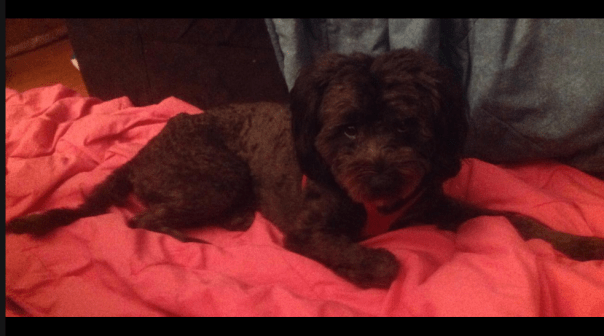
I have a dog

Raider

I have been lookng for a dog that matches with my family and I finally found one.  He is a poodle/shih tzu mix. His previous owner was moving to an apartment that does not accept dogs.

He has made himself at home and seems to be adjusting well.

It will be good for me to have to get up to walk him. And he is comforting

My children are teenagers and excited that he is here.

I am excited to go shopping for him  tomorrow. We have food and some suppies already.
I found a website with a forum on dogs called http://www.dogforum.com


Working Towards a Breakthrough

In my last post I talked about my childhood and how could my parents have thought that was an okay environment. They thought they were superior to others, even.

I know everyone has flaws and maybe combined they had very poor judgement and blind spots.  They weren’t intentionally so hurtful.

I do want to find a way past this. I thought I had. I posted about having compassion and forgiving. I still have some more work to do.


Uncomfortably Numb

I saw my therapist today.

My daughter moved into the dorms for her first year in college yesterday. We talked about that for a while. It is bittersweet. I am very happy for her, but it does feel different with an empty room. I got shaky when I was moving her in. I don’t think it was the lifting, but anxiety. There were so many people.

Once we got all of her stuff in her room, I said goodbye. My husband and son took her shopping for a few last things, and had lunch in the cafeteria. I would not have been able to eat.

I told therapist about the shaking. I was still doing it today. In the room my son was telling me to breathe in my nose and out my mouth to try to help. He is sweet.image I told her when I came home from the last visit I was unsure how I felt. We had talked about the past, growing up, and it was uncomfortable. She asked me what I needed and I said some acknowledgement that parts sucked. The unpredictability.

I tried to be invisible and would do what I was told at home and keep a low profile, and stay away from home when i could. I told her i got into trouble with drugs and my boyfriend, but my parents were too preoccupied to notice or care. She thought that would upset me, that i went unnoticed, but it was my plan.

At one point I told my therapist I was “pulling back”. I guess I was dissociating. I was there but numb to any emotions.

i mentioned how once my mom was talking about my niece, saying really nice things. She brought up my daughter, for some reason, saying she is not the same or something. I said, i know and was agreeing with her, and said that my daughter is really good, but she is different. Then my mother said, ” well, I thought you were good, too.” It really bothered me because I thought she was insinuating my daughter might be up to something she isn’t. My therapist said, ” I don’t know what to say to that. There are so many levels.” And it came out of the blue when my mom said it.

This is so hard. My father is gone. My mom has changed some, for the better.

My therapist said, parents do what they can for their children, unless they are sociopaths, and that mine did not know how to do things differently, is that fair? I squirmed with that. Not the sociopath part. I know they did things the way they thought was the best. I don’t understand how they could think some things were okay to do, let alone good. if I can get past this it might be a breakthrough.

My dad once discouraged me from therapy, because he said you talk about the past and it makes you sad. As far as i know he had never had any therapy and I shrugged it off, but here I am. Talking about the past and feeling sad.

My Story of Forgiveness

Originally published PsychCentral

https://blogs.psychcentral.com/triple-winner/2017/07/my-story-of-forgiveness-and-mental-illness/

forgiveness-1767432_1280

My mother came to visit recently. We have a past issue between us, that I have not been able to forgive. It has to do with when my brother was very symptomatic with a mental illness during my teen years. I have avoided talking about it. She always seems to want to keep to light, happy news and it never seemed appropriate,

She has changed lately. Become a little more down to earth. She brought the issue up on her own and told me of one thing she had done over those years. She had checked out housing for my brother, and told me that she had done all she could. She believes she did everything. I don’t think I did everything. I feel we failed him.

The best thing I can do is let go of the resentment. I will also have to work on forgiving myself another time.

It is hard for me, but, as Lily Tomlin says, “Forgiving is giving up all hope for a better past.”

I think it will help me mentally to not have this bitterness inside and forgiving can protect against the tolls of stress.1

I am trying to have compassion for how my mother must have viewed things. I know she has a lot of anxiety. Maybe, she did/does feel helpless.

There was a lot I did not understand at the time, and still don’t. Mostly, I feel guilty that I had a second chance after a breakdown that did not happen for my brother.

I still have some bitterness. I am a work in progress and forgiveness will take time.

The rest of my siblings have moved on. Maybe things did not trouble them as much or they are more forgiving.

I am hoping to build happier memories with my mother in the future.

She wouldn’t understand if I said it to her, “For what?” but “Mom, I forgive you”.

Learning to Forgive

I was recently working on a blog post about forgiving my mother about past resentments. (I will post it here soon).

When I showed it to a few people they made comments that it was too harsh and that I sounded bitter. I had attempted to find compassion, but somehow in trying to explain “my side of the story”, I lost sight of my goal.

When I pulled back and tried to understand how she may have felt at the time, it made it easier. “I forgive you”‘ isn’t anything I can actually say to her. She doesn’t believe there is anything to forgive. She may be right.

I do feel lighter. I finally have some closure.


Disabilities: What Not To Say

Originally published PsychCentral.com

link

There is a hashtag trending on twitter: #AncientAbledProverbs, started by @HijaDe2Madre. It is about things abled people say to the disabled, often unthinking, that can be hurtful or ignorant. These could be physical or mental, visible or invisible disabilities.

doglisten Continue reading Disabilities: What Not To Say

Suicidal Thoughts, Depression and 13 Reasons Why

Originally posted on PsychCentral

https://blogs.psychcentral.com/triple-winner/2017/06/suicidal-thoughts-depression-and-13-reasons-why/

I watched “13 Reasons Why” recently and it got me thinking about my own suicidal thoughts.

suicideprevention

(I am trying not to spoil it too much, but if you are waiting to watch it you may want to hold off reading)

I was an unhappy teen and had some suicidal thoughts but they were passing and I never acted on them.

I have only had one time where I had a plan. It wasn’t very long ago. I had a method and a date picked out. It wasn’t that I wanted to die. I felt like I was a burden and a failure. I didn’t want to exist. But, part of me wanted to live. I told people my plans, and eventually turned over my means to my husband for safe keeping.

But, the thing about having made a plan is that it is still there in my mind. Sometimes, I think of it. Like it is unfinished business.

The show did not delve into the girl, Hannah’s, mental state. The story is from her view and focuses on how others affected her. It touches on many topics and should spur discussions on suicide and prevention.

I liked it. One thing I did not like was that they depicted her committing suicide. They had warnings that there were graphic and disturbing images. What bothers me is that it shows you how. I know you can google anything, and it isn’t new information, but I don’t think it needs to be shown. Just my opinion.

Older adults have higher rates of suicide than teens and young adults and it is the 10th leading cause of death overall.1 Suicide is the second leading cause of death of teens and adolescents. The rates have been climbing yearly.2

There is hope and help. The show seems to send the message that kindness and friendships can keep one from going down that path. But, there are other kinds of help. There are help lines, therapists, psychiatrists. Antidepressant and other types of medications can help pull you out of a dark place.

The series also makes a point about personal responsibility. If one person had cared enough Hannah felt she would not had made that decision. I don’t know how I feel about that. Survivor’s usually have guilt already, wondering what they could have done differently.

I am glad I did not go through with my plan. I would hate to put my family through that and I am happy to be here today.

Crisis Line:

If you or someone you know is contemplating suicide,
call 1-800-SUICIDE (1-800-784-2433) or 1-800-273-TALK (1-800-273-8255).

  1. https://afsp.org/about-suicide/suicide-statistics/
  2. http://www.mentalhealthamerica.net/suicide

Distorted Thinking and Urges for Alcohol


Originally posted in Psych Central

https://blogs.psychcentral.com/triple-winner/2017/05/distorted-thinking-and-urges-for-alcohol/

thinker

I have abstained from drinking alcohol for 6 months. Day to day, I rarely think about it. I go to weekly meetings and have tools. But, occasionally I get tempted. I went to a restaurant where the drinks were flowing and they looked good. But, I just looked.

Then, I got an annual review at work. It was mostly good, but I focused on the negative comments. It upset me and I felt sad. I came home and I had a strong desire to have a drink to numb my emotions. But, I did something else. I distracted myself. My son had a concert and then I kept myself busy until I fell asleep. I made it to another day.

I went to my group and we did a cognitive therapy sheet. In this sheet, you look for the activating event, the belief(s) (distorted, irrational), consequence of that belief. Then you dispute the belief to come up with more effective ways of thinking, and better emotional consequences.

The activating event was the review and the consequence was the urge. I had all kinds of distorted thoughts. The main one I came up with was that it was “all” bad. The members helped me come up with more. Then we disputed the thoughts and came up with something more balanced. I thought the negative comments are things I can work on. Even if I don’t believe the new thought 100%, it helps.. And, I am not as anxious, sad, moody now.

You don’t have to have a mental illness to have distorted thinking. Anyone can. Based on the work of Aaron Beck, David Burns wrote about 10 types of cognitive distortions in his book “Feeling Good- The New Mood Therapy”1

The types of distortions he lists are:

All-or-nothing or black-or-white thinking. This is one thing I was doing where since part of the review was bad, it was all bad
.
Overgeneralization- If it happened once it will repeat itself.

Mental filter– This is another thing I was doing, where I was only seeing the negative and not seeing the positive

Disqualifying the positive– dismissing compliments, praise

Jumping to conclusions by Mind Reading or Fortune Telling

Magnification (Catastrophizing) or Minimization

Emotional Reasoning– Feelings are not facts

Should Statements

Labeling- Mislabeling or name calling

Personalization– attributing the blame to yourself when it is not all yours

By working through the Activating event, Belief, Consequence, Dispute Belief, effective ways of thinking and better emotional consequence, you can learn to deal with these distorted thoughts. They can help not only with urges but with anxiety, depression and just looking at things in a more balanced fashion.

1 “Feeling Good, The New Mood Therapy” by David Burns

2 photo credit

https://creativecommons.org/licenses/by-sa/2.0/

Stages of Change in Recovery From Alcohol Addiction

Originally published in Psych Central

https://blogs.psychcentral.com/triple-winner/2017/04/stages-of-change-in-recovery-from-alcohol-addiction/

stages of change

(Photo from SmartRecovery.org)

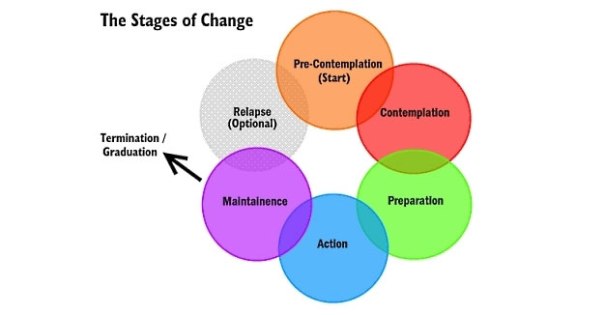
There are a number of stages one goes through when recovering from an addictive behavior.

1. Pre-contemplation — at this stage one is unaware of any problems. Others may point them out, but you have no interest in changing.

2. Contemplation– At this stage one is aware of the problem, but not sure how to change. You may be thinking about changing but ambivalent.

3. Preparation– You develop a plan to change behavior.

4. Action– Modify behavior to put plan into action

5. Maintenance-Able to stick with new behavior with minimum effort and strong commitment

6. (Termination)– In some recovery programs they have a step where you have completed and no longer have the addictive behavior.

(Relapse)-relapse may happen at any time. It is common, but not everyone has a relapse. A relapse is when you revert to the addictive behaviorI was in the pre-contemplation stage with my drinking for years. If people would suggest I had a problem, I thought it was their problem. I started having certain rules. I wouldn’t drink if I had to drive or if I had responsibilities.

When I contemplated changing, I was ambivalent. Not sure I wanted to abstain forever. Not sure it was a problem. I prepared and even started going into action and would stop drinking for a bit, but then I would relapsebecause I had not really made the decision to quit.

I had done cost/benefits (pros/cons) and knew it was beneficial to quit. I knew drinking wasn’t one of my priorities. I knew I would drink more than I wanted to and had trouble abstaining. But, there was a part of me that still said “you’ll miss out on the fun”. And, I may. I will also miss out on any consequences.

I am in active recovery right now. I have been going to meetings and sticking with a plan. I have worked on motivation and controlling urges. I am using cognitive behavioral therapy and other techniques to control my distorted thinking.

I can resist temptations. I have been sober for 5 months straight. Another month of consistency and I believe I will be in the maintenance stage. At my work, they are training a couple of people, including me, to facilitate a SMART Recovery group. Facilitating should help keep me focused.

The end goal of these stages, is to live a life that is complete without alcohol.

13 Reasons Why (thoughts)

I recently watched the Netflix series “13 Reasons Why”. If you haven’t heard of it, it is about a teenage girl who commits suicide.

I don’t have a well-thought out analysis. It brings up many topics and I have no one to discuss them with. I have not read other writings on the series yet.

I am far past my high school years, my daughter graduates this year.  She has seen the show but doesn’t talk to me about much of anything.

SPOILER ALERT: There are spoilers throughout this post, and the series unravels slowly. so if you plan on watching it, read this afterwards.


I don’t know where to start, so I am going to ramble.

One thing that troubled me personally, was the suicide scene. Not so much that it was graphic or disturbing (they did have warnings). Just that it depicted how she did it. I know you can google anything, but some people don’t complete suicides because they don’t know how .

The movie tackles issues like gossip, social media, stalking, drunk driving. Objectification, sexual assault and rape.

It makes you think about some of the common statements people say about suicide, that people act out for attention. About suicide awareness or anti-bullying campaigns and how effective they are. And, that how it is said it was the person’s choice and no one’s fault. It makes you think about personal responsibility and if someone could have done something to stop them.

I thought it was well-done. You start out as confused as the main character and things slowly reveal themselves.

It is one viewpoint but it could spur discussions.

I guess I will go read what others have wrote. If you have seen it and have any thoughts I would like to hear them.

I think high school has changed from when I was a teen and it was not easy then. There was not social media. People did not drug drinks. Maybe I am wrong, but it seemed safer in that respect.

Bullying was not addressed and suicide was not talked about.  They didn’t have the number of anti depressants as today and  there was even more stigma on getting psychological help.

I was left wondering what the main male character, Clay, had done. He did what Hannah asked and had his own emotions. There was a whole series of horrible events that she would not have witnessed had he stayed when she told him to leave, but you can’t blame him for that.

It went into the realm of non-consensual sex and how not saying “yes” means “no”. How the young man felt since she came to his party and went in the hot tub she was willing.

There is so much more.

I am going to post now. I may edit and add as I think of things.